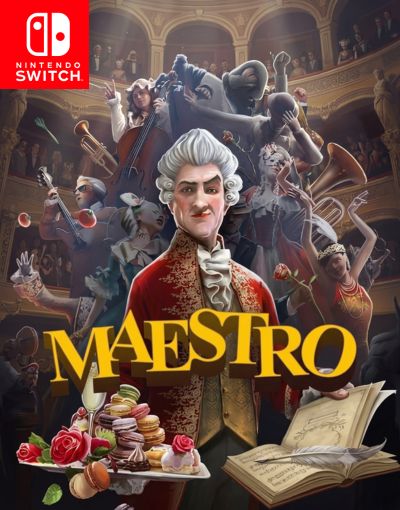
Maestro is an immersive rhythm and music game that places players in front of a virtual orchestra and hands them the role of conductor. Instead of simply pressing buttons to match notes, players use motion controls to guide musicians through performances inspired by classical music and other famous compositions. Every movement matters as you keep the tempo, control the orchestra, and respond to musical cues. With an elegant concert atmosphere, recognizable music, and increasingly demanding performances, Maestro brings the experience of conducting an orchestra to Nintendo Switch.
Step onto the stage as a conductor
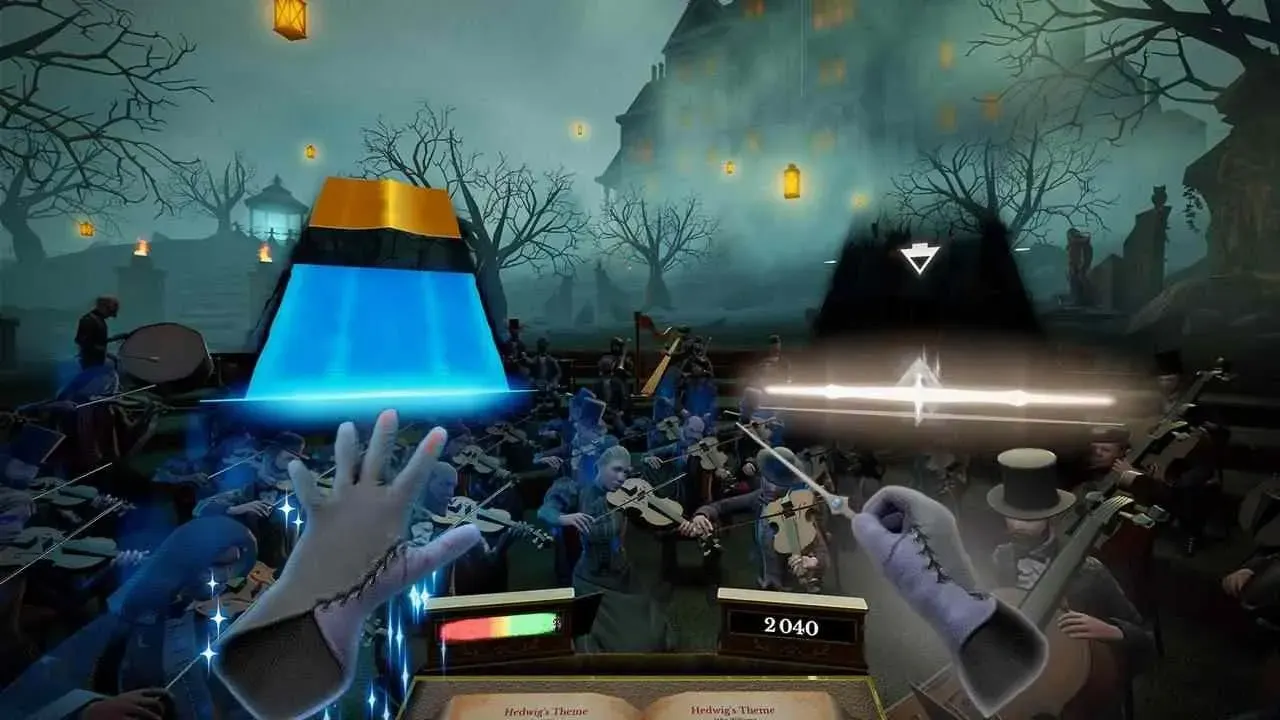
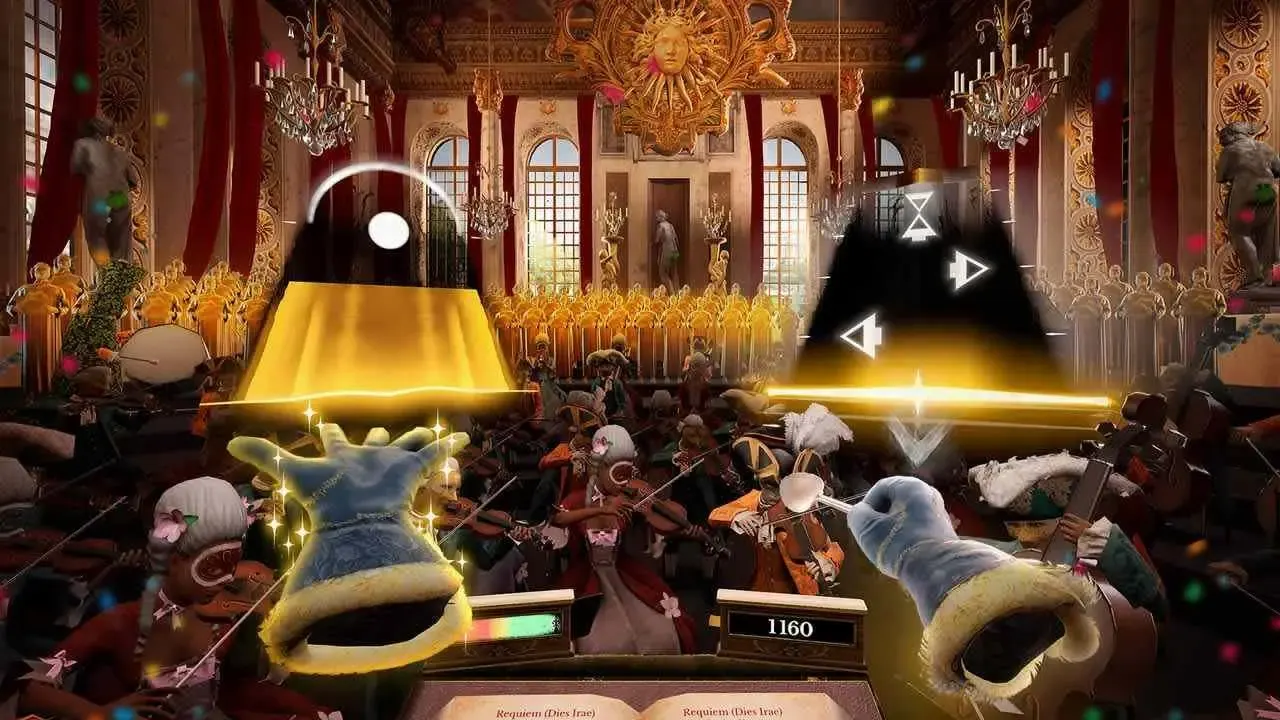
Maestro transforms the traditional rhythm game formula by putting players directly in charge of an orchestra. You stand before a group of musicians waiting for your direction, and the performance depends on your ability to lead them through each composition. Using motion-based controls, players move like a real conductor and follow visual cues that indicate how the music should progress. Timing becomes essential because an orchestra needs clear direction to remain synchronized. Early performances provide an opportunity to understand the basic gestures, but the challenge gradually increases as compositions become faster and more complicated. The presentation helps create the feeling of participating in a real concert rather than simply completing another rhythm-game stage. Musicians respond to your movements, the audience watches from the hall, and every successful performance builds the sensation that you are controlling the music instead of merely listening to it.
Conduct famous musical masterpieces
Music is naturally at the center of the Maestro experience. The game features a selection of recognizable compositions that allow players to conduct different rhythms, moods, and musical styles. Classical works provide some of the most dramatic performances, with orchestral arrangements that require careful attention to tempo and timing. The soundtrack also reaches beyond traditional concert music, giving the experience additional variety and keeping performances from feeling repetitive. Each piece presents its own challenges. A slower composition may demand precise and controlled gestures, while an energetic track can require faster reactions and greater concentration. This variety encourages players to understand the character of each piece rather than using exactly the same approach every time. Familiar melodies also make the experience accessible to people who may not have formal musical training. You do not need to be a professional conductor to enjoy taking control of the orchestra and experiencing well-known music from a completely different perspective.
Master rhythm and precise gestures
Success in Maestro depends on more than waving your hands in time with the music. Players need to read cues, maintain rhythm, and perform the correct gestures as each composition develops. The orchestra reacts to your conducting, creating an immediate connection between physical movement and musical performance. Missing an important cue or losing the tempo can affect how well the concert progresses. As players become more comfortable with the controls, they can concentrate less on individual instructions and more on creating a smooth performance. This gradual improvement gives the game a satisfying learning curve. Simple movements introduce the fundamentals, while more difficult compositions test coordination and timing. The motion-controlled design also makes Maestro feel different from rhythm games built primarily around button combinations. Rather than controlling a single musician, you are responsible for guiding an entire ensemble and keeping every section working together until the final note.
Perform for an unforgettable audience
Conducting an orchestra is also about performance, and Maestro embraces the theatrical side of standing in front of an audience. Musicians and spectators react as the concert unfolds, giving successful performances a sense of energy and personality. The atmosphere can shift between elegant musical presentation and playful humor, preventing the experience from becoming overly serious. Players are encouraged to embrace the role of the conductor rather than simply concentrate on achieving the highest possible score. Every composition becomes a small performance where rhythm, gestures, and stage presence come together. The visual presentation supports this idea by placing the orchestra directly in front of the player and making the concert hall part of the experience. As new challenges appear, maintaining control becomes increasingly satisfying. Finishing a demanding composition without losing the rhythm can create the feeling of successfully leading a complete orchestra through a live performance.
Looking for more games? Browse our collection of Nintendo Switch ROMs and discover more titles available for download.